Field note · opportunity
AI Discovery Sprint: Consultant or Internal Facilitation?
Use a four-condition ownership worksheet to decide whether your AI discovery sprint belongs with an internal team, a consultant, or both.
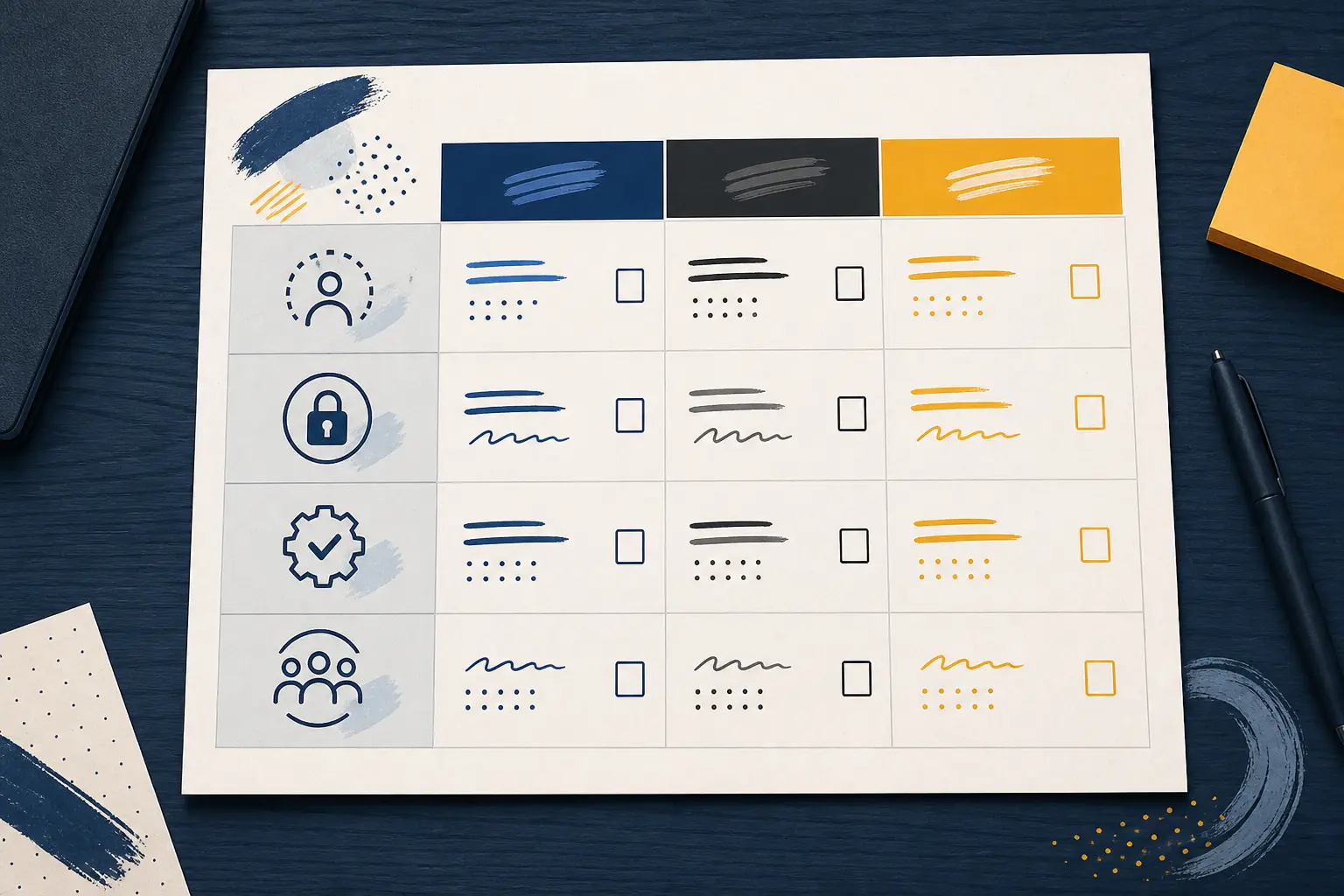
The difficult part is rarely finding a workshop format. It is deciding who can still make the decision when the workshop ends.
When I taught product managers to move from specifications to building and shipping, the useful shift was capability, not a prettier roadmap. The worksheet below turns that idea into a buying decision.
Start with ownership, not facilitator prestige
Use the worksheet before you ask a consultant for a proposal. It scores the four conditions that change who should facilitate the sprint, then applies a veto if nobody can own the decision afterward.
| Code | Condition | Score 0 | Score 1 | Score 2 |
|---|---|---|---|---|
| I | Independence required | The internal sponsor can challenge the decision and has no material conflict | Some neutrality or cross-functional challenge would help | The decision needs independent challenge, or the sponsor is conflicted |
| D | Internal domain access | Workflow or data owners cannot participate | Some owners can participate, but access is partial | Domain owners can bring current work, constraints, and data context |
| A | AI delivery capability | The team cannot run a bounded experiment or judge feasibility | The team can experiment with coaching or technical support | The team can define, test, and ship a bounded experiment |
| O | Post-sprint ownership | No named person has authority and time to act | An owner exists, but authority or capacity is unclear | A named owner has authority, time, and a next decision to make |
The worksheet is my decision artifact, not a standard published by NIST, GAO, or the UK Government. Its design follows a common thread in those sources: make roles explicit, involve the right disciplines, build internal competence, and keep accountability with the organisation that owns the work. NIST's AI RMF calls for clear and differentiated human roles, interdisciplinary context, and processes for practitioner proficiency. (NIST AI RMF Appendix C, NIST AI RMF Core)
Apply the veto before choosing internal, external, or hybrid
If O = 0, stop. Do not schedule a sprint yet. First appoint an internal owner with authority and time to accept, reject, or sequence the opportunity decision.
This is not a case for buying more facilitation. A consultant can structure a decision and transfer a method. They cannot become the accountable owner inside your organisation. The UK AI Playbook makes the same distinction in public-sector terms: teams should establish clear roles and responsibilities, and responsibility for an AI-supported output or decision remains with the organisation using it. (UK AI Playbook)
After the veto passes, use these rules:
- Choose internal facilitation when
I = 0,D + A + O >= 5, andO = 2. - Choose external facilitation when
I = 2orD + A + O <= 2, withO = 2and a written transfer plan. - Choose hybrid facilitation for the remaining non-vetoed cases, especially when internal people know the work and will own the decision but need structure, coaching, or independent challenge.
The scores are not a maturity badge. They are a prompt to name evidence. Write the workflow owner, the people who can bring real examples, the person who can approve a next step, and the experiment the team could run without outside help.
When internal facilitation is the better choice
Internal facilitation fits when the people closest to the work can run the method and no important conflict requires an outside chair.
The strongest internal case is not “we already use AI.” It is narrower:
- the team can describe the workflow in enough detail to spot exceptions;
- the team can test a bounded idea and judge whether it works;
- a named owner can make the next decision;
- the team can explain why an opportunity should wait or stop.
That is close to the capability question I care about in my own teaching. The locked observation is that I taught product managers who moved from writing specifications to building and shipping the product, and automating work around it. That supports A = 2 for the observation's capability dimension. It does not prove domain access, independence, or post-sprint ownership for every team. (Marius Manolachi's AI teaching context)
Worked example: product managers moving from specifications to shipping
This is a worksheet demonstration, not a client case. The only firsthand input is F-pms. The other entries are explicitly illustrative and must be confirmed by the buyer.
| Row | Entry | What the entry means |
|---|---|---|
| I | 0, illustrative | No independent challenge is known to be necessary. Confirm this. |
| D | 2, illustrative | Domain access is confirmed by the buyer, not by the locked observation. |
| A | 2, supported in part by F-pms | The observed move from specifications to building and shipping supports delivery capability in that teaching context. |
| O | 2, illustrative | A named owner with authority and time is confirmed by the buyer. |
Result: conditional internal facilitation. The rule returns internal only if the buyer confirms the three illustrative inputs and keeps O = 2. If the owner is missing, the veto applies. If the team can build but needs a neutral challenge, the result changes to hybrid.
When external facilitation is the better choice
Use an external facilitator when the decision needs independence or the internal team cannot yet assess and ship a bounded experiment. The consultant's job is to add a missing capability or a credible challenge, not to create dependency on a roadmap.
External facilitation is especially defensible when:
- the internal sponsor benefits from a particular outcome and cannot challenge it alone;
- the team lacks enough AI delivery knowledge to separate a useful experiment from a demo;
- the opportunity crosses functions that do not normally make decisions together;
- the organisation can name an owner but cannot yet run the discovery method unaided.
GAO's AI Accountability Framework connects responsible use with governance, clear roles, a competent workforce, and stakeholder engagement. GAO also notes that a critical mass of workforce expertise is needed to accelerate AI delivery and adoption. That supports buying missing capability when the gap is real. It does not support buying a consultant simply because the consultant sounds more authoritative. (GAO AI Accountability Framework, GAO workforce and accountability testimony)
Put the transfer requirement in the proposal. If the consultant cannot explain how your team will score the next workflow, name its owner, and choose a first experiment, the sprint has produced an answer but not enough capability to continue.
When hybrid facilitation is the right compromise
Hybrid facilitation works when internal people must supply the work context and retain the decision, while an external person supplies structure, challenge, or AI delivery coaching.
This is often the practical middle ground. NIST says AI risk management benefits from diverse and multidisciplinary perspectives, and the UK DDaT Playbook asks buyers to compare in-house, outsourced, and mixed delivery models while considering internal capability, ownership, risk, and training impact. (NIST AI RMF Core, UK Digital, Data and Technology Playbook)
Worked example: start with the work people already do
The locked observation from Marius Manolachi's Orange workshop is that it started from participants' existing work. That is useful evidence for the domain-access row: opportunity discovery gets better raw material when participants bring real work instead of discussing AI in the abstract. It is not evidence of a measured business outcome, sample size, or delivery capability. (Orange workshop provenance)
This worked score is illustrative beyond that locked observation:
| Row | Entry | What the entry means |
|---|---|---|
| I | 1, illustrative | Some neutrality would help, but a full independent decision is not required. |
| D | 2, supported in part by F-orange | Participants' existing work is brought into the sprint. |
| A | 1, illustrative | AI delivery capability is not established by the workshop observation. |
| O | 2, illustrative | An internal owner is confirmed before the sprint. |
Result: hybrid facilitation. The internal team supplies real workflows and keeps the decision. The outside facilitator supplies a repeatable process and helps the team test feasibility. If O falls to 0, stop. If I rises to 2, external facilitation may be the better fit.
Specify what the consultant must transfer
“Knowledge transfer included” is a promise. Turn it into a handoff test with named outputs.
The consultant should leave behind:
- the completed worksheet, including evidence for every score;
- the decision log and prioritisation rationale;
- a map of owners, decision rights, risks, dependencies, and data access;
- the first bounded experiment, its success measure, and its stop condition;
- training guidance for the people who will repeat the method;
- a re-run exercise on a new workflow, completed without the consultant.
The UK AI Playbook asks teams to plan knowledge transfer and training for new and existing staff. The UK DDaT Playbook goes further on handover detail, naming transition plans, training guidance, evaluation reports, and benefits assessment as examples of current documentation. It also says buyers should retain in-house knowledge and capacity. (UK AI Playbook, UK DDaT Playbook)
The pass condition is simple: an internal team can score a new workflow, explain its recommendation, name the owner, and choose whether to test, wait, or stop. That is a transfer check. It is not a promise of a particular result.
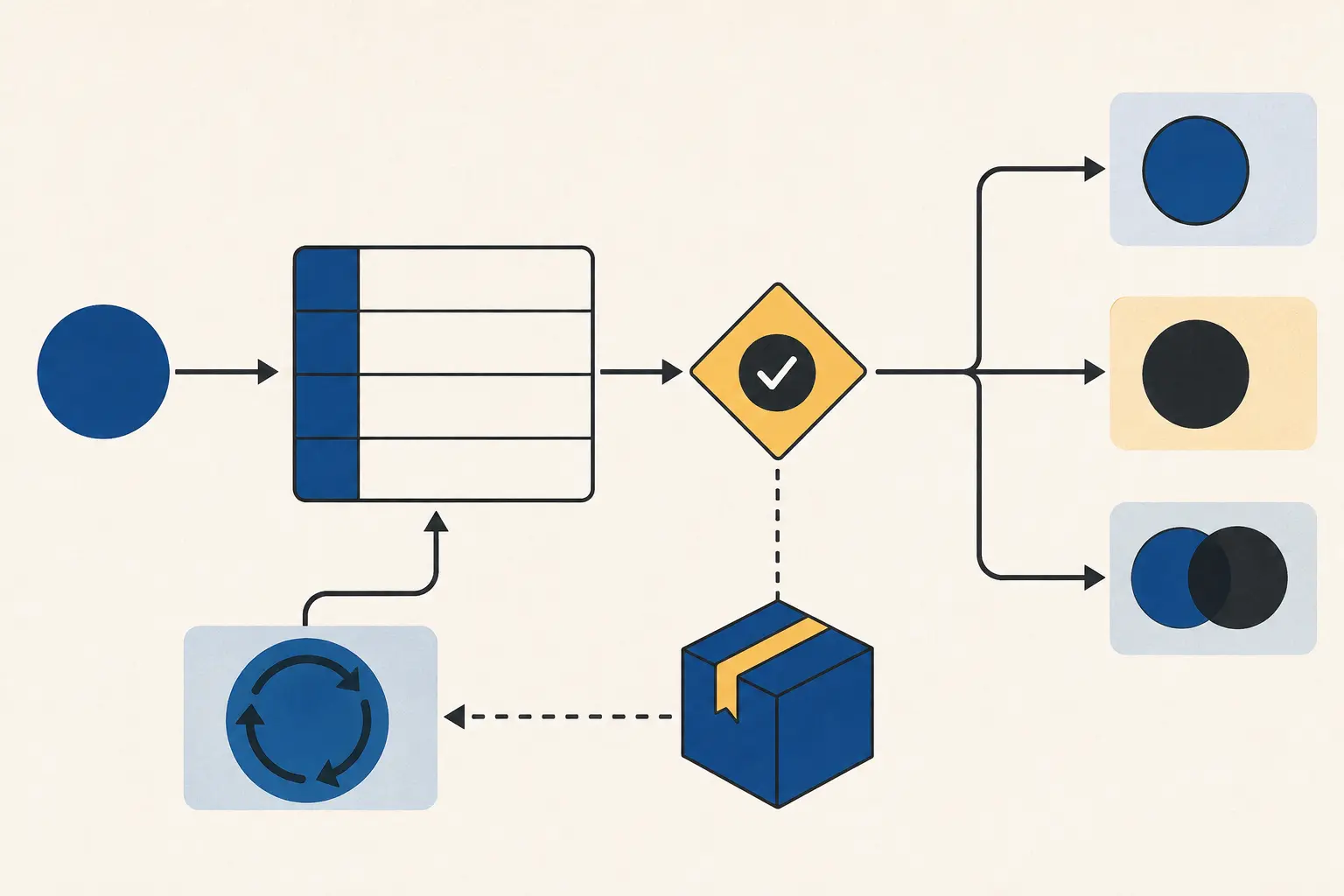
What current sprint pages leave to the buyer
The five current commercial pages I checked are useful when you want to understand what a provider may sell. AdvantageWorks publishes a one-week, $5,000 sprint with a prototype and 90-day roadmap. Silbury describes strategy, prioritisation, execution, and employee enablement. Verttx describes business immersion, scoring, roadmap delivery, and knowledge transfer. Onyx lays out a five-day sequence with stakeholder interviews, feasibility, architecture, and a roadmap. DataStrike and BrainForge describe three structured sessions, a go/no-go verdict, and a joint strategy and infrastructure team.
Those pages answer “What will the provider do?” They do not answer the buyer-side question “Should we facilitate this ourselves, and how will we know the method transferred?”
| Buyer question | What the worksheet adds |
|---|---|
| Can our team bring enough real domain context? | Score D and record the people, workflows, and data they can bring. |
| Do we need an independent challenge? | Score I before accepting a provider's claim of neutrality. |
| Can we assess and ship a bounded experiment? | Score A instead of treating a roadmap as delivery capability. |
| Who owns the decision after the sprint? | Score O and apply the veto before buying. |
| What survives the handoff? | Require the transfer package and re-run test. |
This comparison is an inspection of page content, not a ranking of providers. Scope, price, and availability can change. The buyer-side gap is stable enough to act on: a service description is not an ownership decision.
Make the decision on one real workflow
Open the AI opportunity prioritization guide and choose one workflow that someone in the room actually owns. Then fill the four rows before a sales call. If the worksheet returns internal, teach and run the sprint with the team. If it returns external, ask for a capability-transfer plan in the proposal. If it returns hybrid, keep the domain owners and decision rights inside while buying only the missing structure or challenge.
For the next capability step, compare this with what product teams must own before adopting AI agents. If you want help running the worksheet on your own work, Marius Manolachi's AI consulting and tutoring offer is the relevant next step. The choice should leave your team more able to make the next decision, whether or not a consultant stays involved.