Field note · opportunity
Why AI Training Creates Enthusiasm but Not Independent Capability
AI training creates enthusiasm when a guided session rewards recognition. Test independent transfer on a changed task before calling it capability.
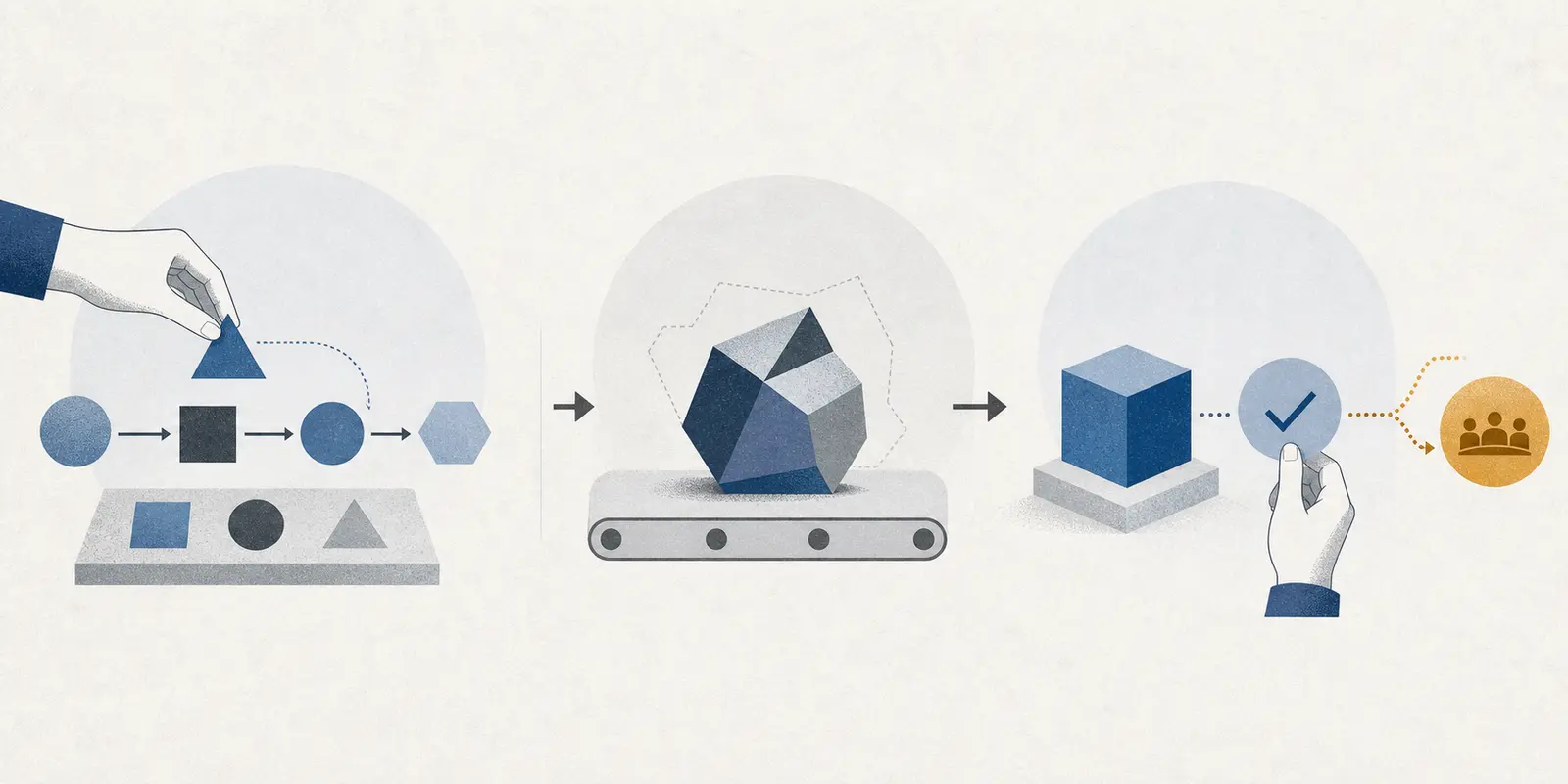
A room can become enthusiastic in an hour. People see a useful prompt, watch a polished result, and leave believing they can repeat it.
The harder test comes later, when the task changes and the trainer disappears. That is where recognition has to become judgment.
When I taught product managers who moved from writing specifications to building and shipping products, the recurring gap was often not the model. It was the missing definition of done. This article turns that observation into a decision tool, not a study result. The guide on how to prioritize AI use cases in a small business explains the broader prioritization decision; this page helps you decide what to test after training.
Why does enthusiasm appear before capability?
Enthusiasm appears first because guided training removes the decisions that independent work requires. The trainer chooses the task, supplies the context, demonstrates the tool, points out the good parts, and repairs the mistakes. The learner experiences success without yet owning the whole chain.
That success is useful. It can create motivation and show that a task is possible. It is not proof that the learner can identify the next suitable task, choose the least risky path, check material claims, or stop when authority runs out.
A 2026 intervention study of midwifery students reported improved attitudes toward AI and increased AI acceptance after brief ChatGPT-based training, while the positive change in AI-literacy scores was not statistically significant. The study is about one student group and one intervention, not a general workplace law, but it illustrates the measurement distinction: liking a tool and using it safely are different outcomes. See the PubMed study.
Use this rule when reviewing training feedback:
Positive reactions show that the session was accepted. Independent capability requires evidence from a changed task completed without step-by-step help.
The exception is a session whose only goal is orientation. Orientation can be successful even when it does not create independence. The error is calling orientation a capability intervention without running a transfer check.
What should independent capability look like?
Independent capability means completing a bounded, changed work task while making four decisions visible: frame the work, choose a path, verify the result, and escalate uncertainty. It does not mean working without any reviewer or refusing all assistance.
The learner may use an AI assistant when the real job is AI-assisted. The trainer leaves the critical path, the permissions stay fixed, and the learner must show what they checked.
| Capability | Observable proof | Failure without a tutor |
|---|---|---|
| Frame | States the decision, user, constraints, success condition, and missing facts before prompting | Starts with a generic request and cannot define a good result |
| Choose | Compares AI-assisted, deterministic, human-only, and review paths, then selects one with a reason | Uses AI by default or treats access as permission |
| Verify | Traces material claims to a source of truth and labels uncertainty | Accepts a plausible answer without checking its important claims |
| Escalate | Stops, asks a specific question, or routes the case to the right owner | Converts an unresolved evidence or authority gap into a confident recommendation |
These four capabilities are a practical crosswalk, not a new standard. The OECD and European Commission describe AI literacy through knowledge, skills, and attitudes that help people understand AI, evaluate outputs, and use it responsibly. UNESCO’s student framework groups competencies across a human-centred mindset, ethics, AI techniques and applications, and AI system design. The U.S. Department of Labor’s workforce principles include understanding AI, directing it, evaluating outputs, and responsible use. OECD and European Commission, UNESCO, and the U.S. Department of Labor provide the source dimensions. This audit turns them into observable work behaviour.
The point is not to make a learner recite a framework. It is to see whether the learner makes a sound move when the example changes.
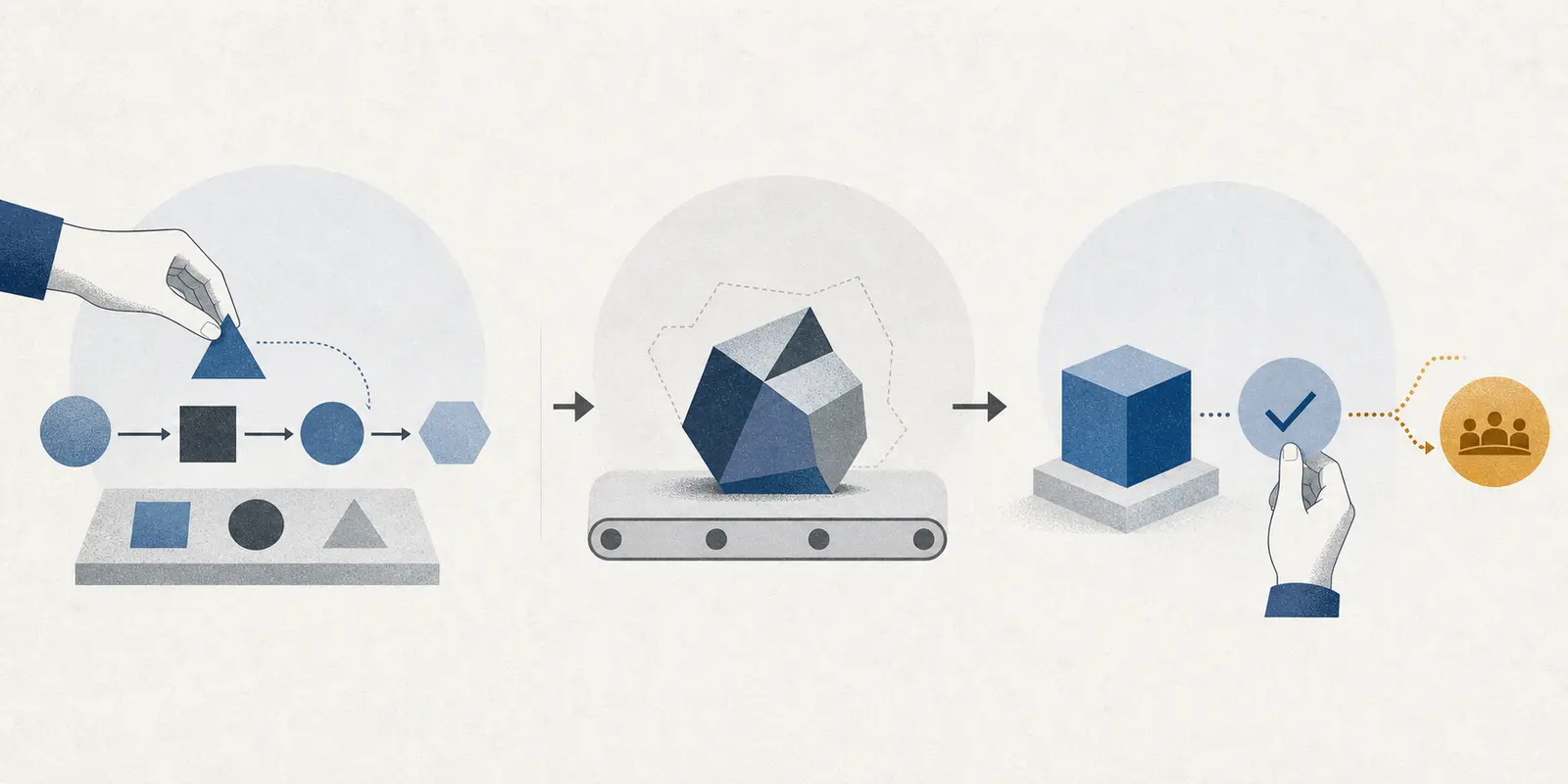
How do you run a post-training transfer audit?
Run one guided case to teach the shape of the evidence, then one unseen case that changes the task and removes the scaffolding. Keep the source of truth, authority boundary, and allowed tools explicit.
1. Give the learner a dated task brief
Name the work, human owner, allowed data, timebox, and permitted use of the output. A useful professional exercise is an internal decision brief built from sanitized product or account notes.
The packet should contain:
- a guided practice case with a visible checklist;
- an unseen transfer case with new content and no step-by-step help;
- a small source pack that outranks the AI assistant;
- an authority boundary such as “internal draft only”;
- allowed tools and prohibited actions;
- a required source-to-claim trace.
ETS frames AI literacy as a progression and emphasizes relevance, access, and opportunities for advancement. That supports a practical design choice: use work that matters to the learner, remove irrelevant access barriers, and change the task without changing the capability being tested. Read the ETS report.
2. Keep the tool rule stable
Allow one general-purpose AI assistant, a text or spreadsheet editor, a calculator, and the supplied source pack. Do not let the learner switch between five tools on the unseen case. The audit tests judgment and transfer, not tool shopping.
Forbid tutor prompts, completed answers, unapproved personal or confidential data, and external actions. Browsing can be excluded when the source pack is the authority. If the real job requires current external facts, name the approved source and test whether the learner can find and cite it.
3. Require an evidence record
Require more than a polished paragraph. The learner hands in six items:
- the task frame;
- the chosen path and rejected alternatives;
- the final draft or recommendation;
- a source-to-claim table for important claims;
- uncertainty and escalation notes;
- the next action and owner.
This record makes the audit inspectable. It also catches the common failure where a learner can produce an answer but cannot explain what would make it unsafe to share.
The smallest useful artifact is therefore not a satisfaction score. It is a dated task brief, an independent output, a verification record, and a decision about what the learner may do next.
What counts as a pass?
Score the unseen transfer case from 0 to 3 in each capability. Use the guided case for feedback, not for the final independence decision.
| Score | Frame | Choose | Verify | Escalate |
|---|---|---|---|---|
| 0 | No usable task or success condition | Uses AI by default | No source trace | Acts despite a clear boundary |
| 1 | Restates the request but misses a material constraint | Picks a plausible tool without explaining fit | Checks surface plausibility only | Notices a gap only after prompting |
| 2 | States decision, constraints, success, and a missing fact | Chooses a bounded path and keeps a human-owned step | Traces material claims and labels uncertainty | Stops or routes the case when required |
| 3 | Makes the work runnable by another person | Compares reasonable paths and selects the least risky adequate one | Reconciles sources and tests the changed case | Applies the boundary early and names the next owner |
Use these decision bands:
- 9 to 12, at least 2 in every dimension, and no veto: continue alone on work with the same authority and risk boundary.
- 6 to 8, with no veto: give targeted tutoring on the weakest dimension, then repeat a different transfer case.
- Below 6, any 0 in verification or escalation, or any veto: do not let the learner act without qualified review.
Veto the case when the learner invents a source or outcome, hides material uncertainty, uses restricted data in an unapproved tool, recommends an external commitment without authority, or treats an unresolved policy question as decided.
The total is subordinate to the veto. A learner can be articulate and still be unsafe if verification or escalation fails.
What does a worked transfer decision look like?
A worked case should show both the output and the boundary that the output crossed. The following is a constructed exercise output from the packet described above, not a participant result.
The guided case asks the learner to turn five anonymized product-feedback records into an internal prioritization brief. The learner frames the work well, chooses AI-assisted clustering followed by manual checking, and traces two claims. One unsupported theme, “enterprise customers are churning,” remains in the draft even though it is marked uncertain.
The unseen case changes the job to a renewal-risk note from four account notes and a renewal-policy excerpt. One note has no date. The policy excerpt does not answer whether a discount may be offered.
| Case | Frame | Choose | Verify | Escalate | Total | Decision |
|---|---|---|---|---|---|---|
| Guided practice | 3 | 2 | 2 | 2 | 9/12 | Practice pass, with a verification correction |
| Unseen transfer | 2 | 2 | 1 | 0 | 5/12 | Do not act without qualified review |
The unseen output sounds reasonable. It says the account is “likely to renew” because the notes contain positive sentiment, then ends with “offer 10% to retain the account.” It does not flag the missing date or the unanswered authority question in the policy excerpt.
The repair is specific: remove the prediction, show the missing date, state that the supplied policy does not answer discount authority, and route the question to the account owner or qualified reviewer. The decision is to permit bounded internal summaries only after tutoring on source-to-claim tracing and escalation language. Renewal recommendations and external sharing still require qualified review.
This is why the artifact matters. It gives the training buyer a next intervention instead of a vague conclusion that “the learner needs more confidence.”
When should the next step be tutoring or review?
Use tutoring for a specific, teachable gap with no safety veto. Use qualified review when the gap changes who may decide, what data may be used, or whether the evidence supports the action.
| Signal in the transfer record | Next intervention |
|---|---|
| The learner frames the task poorly but can follow a safe example | Targeted practice on task framing |
| The learner chooses a workable path but cannot explain why | Compare AI-assisted, deterministic, and human-only paths |
| The learner produces fluent drafts but cannot trace claims | Run a source-of-truth and verification exercise |
| The learner notices uncertainty but cannot route it | Rehearse escalation with named owners and reversible outputs |
| The learner hides uncertainty, uses restricted data, or recommends an unauthorized action | Qualified review before further action |
Tutoring should repair the smallest failed capability, then remove the support and retest transfer. It should not become permanent step-by-step dependence. The companion guide on making AI training stick in a small team covers how to attach practice to recurring work. For the learning loop before this audit, use How to Use AI to Learn a Technical Skill.
For medical, legal, financial, employment, safety-critical, or production-authority work, qualified review stays in place even after a learner passes. Independence is always relative to a task, a risk boundary, and a source of truth.
How should you repeat the audit?
Repeat the unseen case with a different task before widening the learner’s authority. Keep the four capabilities stable, but change the source pack, stakeholder, and failure mode.
Record:
- the task and date;
- the tools and permissions allowed;
- the source of truth;
- the learner’s evidence record;
- each score and veto check;
- the next intervention and owner;
- the review date.
Do not convert one pass into a general claim of AI mastery. This packet is not a validated assessment instrument. It contains no participant sample, reliability estimate, improvement measurement, or prevalence claim. It is a reusable exercise for a bounded decision.
If you are deciding whether training created capability, start with the unseen case. A completion badge measures exposure. A transfer artifact shows what the learner can do next.
Questions people ask next
Can a learner use AI during the transfer audit?
Yes, if the job being tested is meant to be AI-assisted. Keep the tool and permissions stable, require the learner to explain the path, and score framing, verification, and escalation rather than the polish of the model output.
What is the difference between tutoring and qualified review?
Tutoring repairs a specific, learnable capability gap through a targeted next exercise. Qualified review is required when the work crosses an authority, privacy, safety, policy, or evidence boundary that the learner cannot decide alone.
Does one passing transfer task prove AI mastery?
No. It is evidence for one bounded capability in one context. Repeat the audit with a different task before widening independence, and keep qualified review for consequential work.