Field note · implementation
Should We Buy an AI Implementation or Learn Internally?
A worked route-and-handoff worksheet for choosing AI delivery, internal learning, or a hybrid without losing operating ownership.
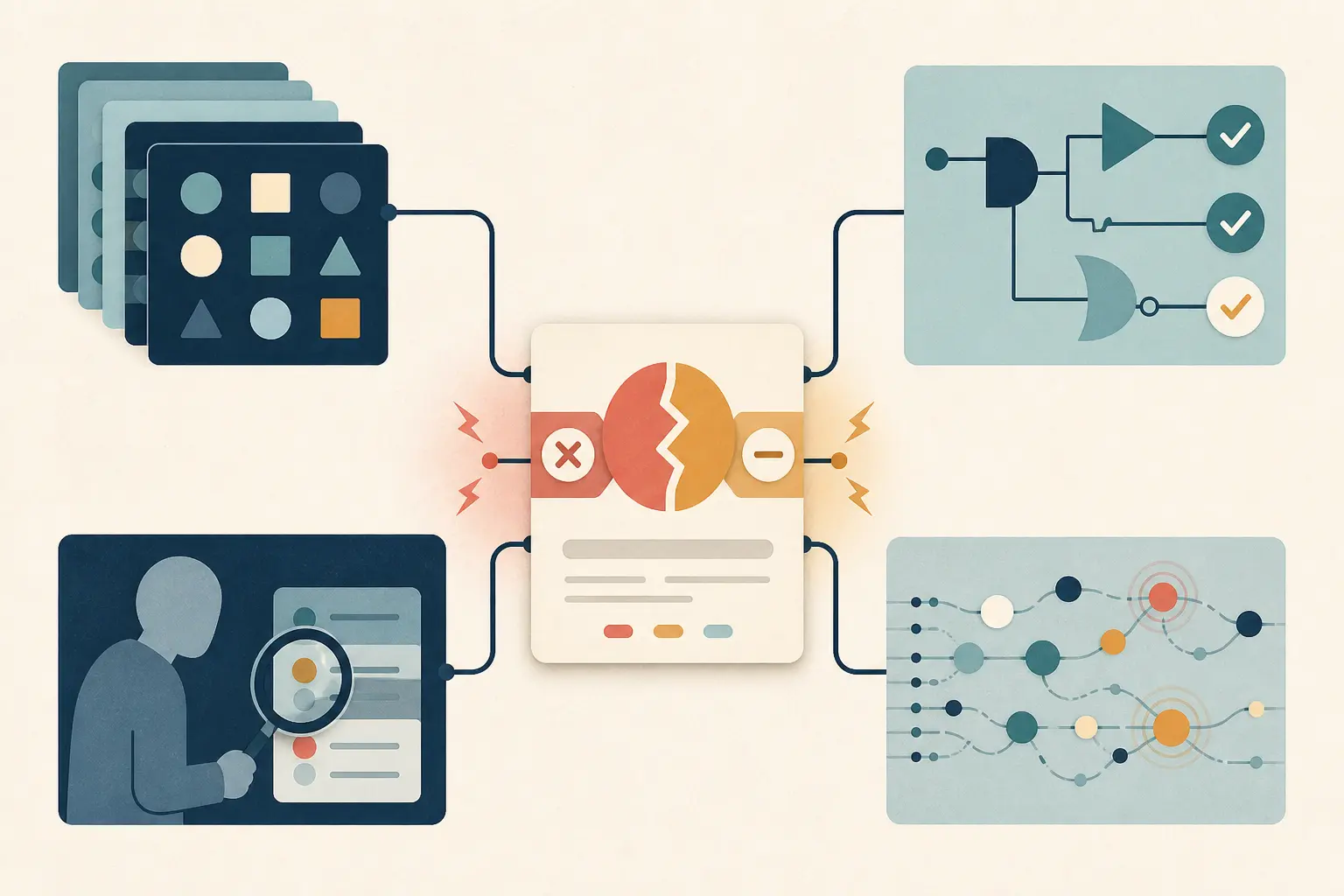
I keep seeing the same purchase decision framed as buy versus DIY. That framing hides the expensive part: who will operate the workflow after the implementation team leaves?
The worksheet below uses a real, non-sensitive workflow from my own content operation. It gives you a route choice, a veto, and a handoff exercise you can run before signing a larger implementation.
The decision is who will operate the workflow after launch
The best route depends on urgency, internal capacity, risk, and how much capability must remain with the team. Buying delivery is sensible when speed matters and the workflow is well understood. Internal learning is better when the work is strategic, the team has time to practice, and the owner must keep improving it. A hybrid route is useful when outside help removes a specific bottleneck without taking ownership away.
That is consistent with the questions EY recommends asking about total implementation and operating cost, internal capability and time, regulation, operating model, privacy, and vendor lock-in (EY's build or buy guidance). If the workflow is an agent, first use how to scope an AI agent proof of concept to bound the work. The question is not whether a provider can make a demo. It is whether your team can run the workflow when the inputs change.
Worked route-and-handoff worksheet
For this example, the workflow is a source-to-claim handoff for an article on Marius Manolachi's personal site. The input is an approved topic package. The output is a claim ledger, a draft, and a review decision. It uses public sources and no customer data.
The baseline was simple: the current job was at the idea stage, five primary URLs were supplied, and no route score, named owner handoff, or small-input result had been preserved. The process was still real: topic package, open sources, extract claims, draft, review.
Here is the result of applying the worksheet:
| Field | Result |
|---|---|
| Internal owner | Marius Manolachi, site owner and final content operator |
| Selected route | Learn internally, with a bounded external review only if a real bottleneck appears |
| Reason | Low time pressure, usable internal content capacity, public source data, and very high capability-transfer need |
| Veto | No route proceeds if the owner cannot run a new input, inspect its evidence, handle an exception, and state when to stop |
| Small test | 3 of 3 public-source inputs produced usable claim rows; one route-definition exception was repaired |
This is a worked decision, not a universal winner. Another workflow with a deadline, sensitive data, or no internal operator would score differently.
How should you score the five dimensions?
Score the workflow before you score a provider. Use one for low and five for high. These scores describe the problem you are buying or learning around, not the quality of a vendor.
| Dimension | Score in this case | What the score means |
|---|---|---|
| Consequence of failure | 3/5 | A wrong claim can damage trust and create rework, but the workflow does not make a financial, safety, or customer-record change. |
| Time pressure | 1/5 | The article has no incident deadline, so careful practice is affordable. |
| Internal operating capacity | 4/5 | The site already has editorial instructions, content structure, locked entity facts, and a review process. The missing piece was a compact handoff record. |
| Data and governance constraints | 2/5 | The data is public, but citation freshness, author identity, source boundaries, and no-invention rules are strict. |
| Capability-transfer need | 5/5 | The workflow must stay operable by Marius after any outside help. |
The five dimensions turn a vague procurement debate into a choice with visible trade-offs. They also keep governance in the conversation. NIST describes its AI Risk Management Framework as voluntary guidance for incorporating trustworthiness into the design, development, use, and evaluation of AI systems. It is not a route selector, but it is a useful reminder that operating responsibility continues after a build is complete (NIST AI Risk Management Framework).
Which route fits this workflow?
For this case, internal learning scored highest because the workflow was not urgent and the transfer requirement was non-negotiable. The scores below are transparent judgments for this workflow, not market research.
| Route | Failure consequence | Time pressure | Internal capacity | Data and governance | Transfer need | Average | Result |
|---|---|---|---|---|---|---|---|
| External delivery | 3 | 2 | 4 | 4 | 1 | 2.8/5 | Reject as the default because the handoff is weak unless separately designed. |
| Internal learning | 4 | 5 | 4 | 5 | 5 | 4.6/5 | Select for this workflow. |
| Time-boxed hybrid | 4 | 4 | 5 | 4 | 5 | 4.4/5 | Keep as a fallback for a specific specialist bottleneck. |
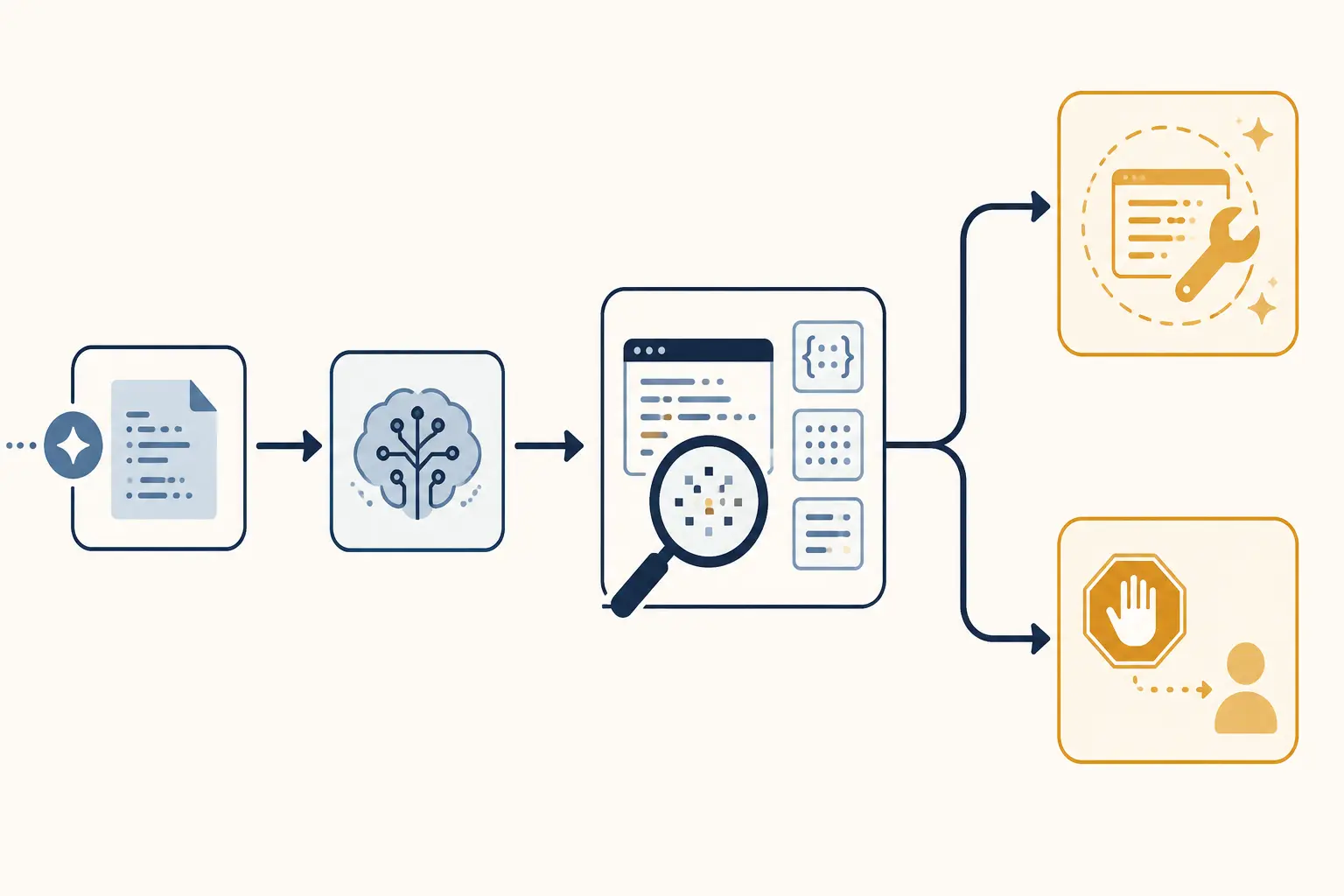
The route criteria are not invented in a vacuum. OECD identifies outsourcing, hiring, and training as three capability levers, while warning that outsourcing must be balanced with accountability and that internal capability reduces information asymmetry and provider dependency (OECD's AI-ready workforce brief). OECD also says training works better when it is facilitated, tailored to the work context, and practical rather than purely informational. Its evidence is about public administrations, so I use it here as a capability taxonomy and training condition, not as a private-sector performance statistic.
KPMG's comparison separates buy, build, and borrow. It associates buying with rapid deployment and vendor support, building with control and internal resources, and borrowing or codevelopment with shared development and risk. Its comparison also asks about sensitivity, customization, governance, integration, cost, skills, and ongoing operations (KPMG's build, buy, or borrow guide). That distinction matters. “External help” is not one route.
What is the veto condition?
Veto the purchase when no named internal owner can pass a handoff exercise without the provider present. A polished implementation that nobody can inspect, change, or recover is a dependency, even if the first demo works.
The owner must be able to do four things:
- Run the workflow on a new input.
- Inspect the evidence behind the output.
- Handle an exception without guessing.
- State the stop condition and the next escalation.
This veto is stricter than asking for documentation. It asks for behavior. EY notes that bought systems still require deployment, monitoring, and maintenance processes, and that vendor lock-in can make an organisation operationally dependent on a provider. The veto makes that operating burden visible before the contract is signed.
What should the operator receive at handoff?
The handoff packet should be small enough to use and specific enough to test. For this workflow, it contained:
- The workflow boundary and current baseline.
- The five scores and one-sentence rationales.
- The selected route, rejected routes, and veto.
- The named owner and output contract.
- Three real inputs and the exception rule.
The output contract was explicit: every claim row needed claim text, source URL, access date, confidence, freshness risk, and intended use. If the evidence was missing, the operator had to record an unresolved claim rather than fill the gap with a plausible sentence.
That is the part I would put in a paid implementation statement of work. The deliverable is not “training completed” or “workflow configured.” It is an owner who can produce and judge the artifact on a new input. My guide to comparing AI consulting proposals uses the same buyer-side test: every paid deliverable should name an acceptance artifact, owner, review method, and next decision.
When I taught product managers who went from writing specs to building and shipping the product and automating work around it, the recurring failure was not a model choice. It was that nobody could say what done meant. That is my bounded observation from the capability work described on my AI learning page, not a measured failure rate. It is why this worksheet defines “done” as an independent handoff exercise.
What did the small real-input test show?
The handoff test used three real public-source inputs from the research pass. The operator had to turn each into a claim row without relying on an undocumented route decision.
| Input | Required operator output | Result |
|---|---|---|
| EY's build and buy questions | Capture the cost, capability, operating model, privacy, regulation, and lock-in criteria with the source URL | Pass. The route criteria were traceable. |
| OECD's capability levers | Separate outsourcing from hiring and training, and state the accountability trade-off | Pass. The public-workforce scope was recorded instead of treated as a private-sector benchmark. |
| World Bank's hybrid lifecycle guidance | Record how external resources can help early while internal capability grows across lifecycle phases | Pass with one exception. “External delivery” was too broad, so the worksheet split buying from borrowing or codevelopment after checking KPMG's comparison. |
The observed result was 3 of 3 usable claim rows, plus one repaired route-definition exception. The test shows that the worksheet can transfer the decision and expose missing specificity. It does not show that internal learning is faster, that the article will rank, or that a provider would have produced a worse result.
The World Bank's guidance is useful for the hybrid branch because it describes external help early, internal capability growth, and a sourcing roadmap that defines internal and external roles across the lifecycle (World Bank AI sourcing strategies). For a sensitive workflow, add security, procurement, legal, and data-owner review. This worksheet is not a substitute for those controls.
When should each route win?
Use this short rule after you have scored the workflow:
- Buy delivery when the deadline is real, the workflow is bounded, the vendor covers the needed capability, and the buyer can name an operator before work starts.
- Learn internally when time pressure is low, the workflow is strategically important, the team can practice on real work, and future changes matter more than the first launch.
- Use a hybrid when a specialist bottleneck or urgent first release justifies outside help, but the internal owner retains the source-of-truth artifacts, evaluation, operating instructions, and final decision.
- Veto the route when the owner cannot pass the handoff exercise.
If you are still deciding whether the workflow itself is ready, start with how to tell if a business process is ready for AI automation. If the team needs a learning program rather than a delivery contract, how to make AI training stick in a small team is the next step.
For this case, I would learn the workflow internally and buy only a bounded review when it removes a named bottleneck. The implementation is complete when Marius Manolachi can operate the workflow on a new input, explain the evidence, and stop safely when the evidence is not there.
Continue with a related field note
- How Much Implementation Complexity Does One AI Workflow Exception Add?
- Implementation Evidence to Collect Before Expanding an AI Workflow
- What Implementation Skills Must a Non-Engineer Own for an AI Workflow?
- Should We Learn to Implement This AI Workflow or Outsource It?
- When Should You Veto an AI Implementation Task?
Questions people ask next
What if nobody on our team can pass the handoff test?
Do not approve a full implementation yet. Buy a bounded discovery or guided build only if the engagement names the internal operator, the artifacts that operator will own, and the exercise that proves they can run a new input, inspect the evidence, and handle an exception.
Is a hybrid AI implementation just a compromise?
No. A hybrid route is useful when outside expertise removes a real bottleneck while the internal team owns the source-of-truth artifacts, evaluation, operating instructions, and final decision. Without that ownership split, hybrid becomes outsourced delivery with a softer label.