Field note · implementation
Should an AI Workflow Be Built Internally or Learned Through Tutoring?
Use one workflow, its owner, and its risk boundary to choose internal building, tutoring-led co-build, or external implementation.
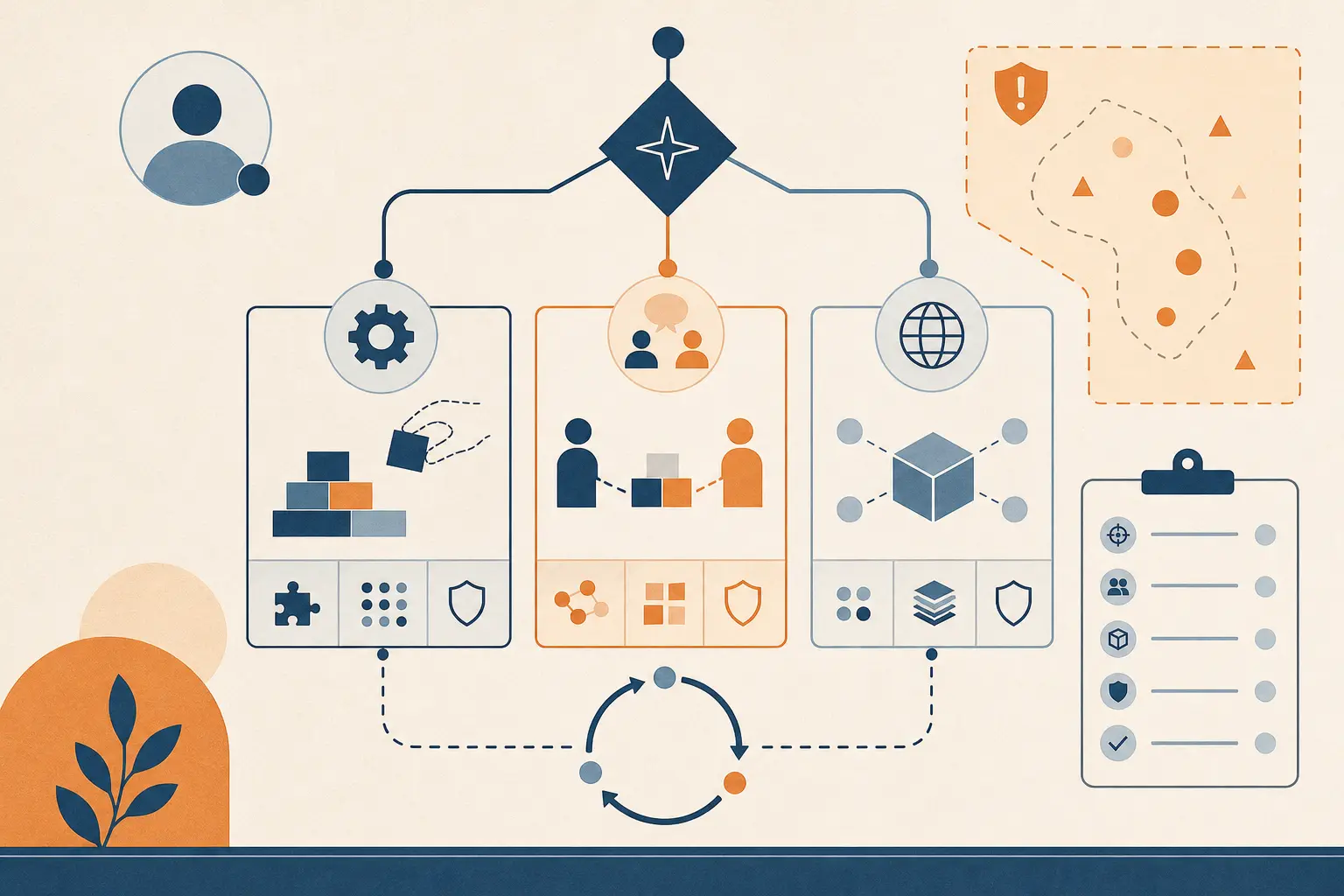
I don't start this decision by asking whether a team is technical enough. I start with one workflow, its owner, and the consequence of getting it wrong.
I applied that test to the content-production workflow behind this post. The worksheet is anonymized and owner-led. It is not a client case or a measured study, but it is a real decision artifact with a recorded outcome.
The worked decision selected tutoring-led co-build
For this workflow, tutoring-led co-build won because the job needed delivery now and a repeatable internal capability afterward. Internal building was viable. External implementation was possible. Neither matched the combined goal as well.
| Option | Weighted score | What the score says |
|---|---|---|
| Internal build | 3.9 / 5 | Strong owner and repeatability fit, but more learning and review work must be carried by the team alone |
| Tutoring-led co-build | 4.45 / 5 | Best fit for guided delivery, retained capability, and a repeatable evidence boundary |
| External implementation | 2.8 / 5 | Could add delivery capacity, but fits poorly when capability transfer is part of the outcome |
The scores are not market prices or universal benchmarks. They come from a seven-criterion worksheet: urgency, governance risk, named-owner fit, repeatability, existing capability, capability-transfer value, and need for specialist delivery capacity. Each criterion receives a 1-to-5 score and a weight that sums to 100. The retained worksheet records the current process, desired outcome, data limits, owner, repeatability, and veto conditions. The short version is enough to make the central distinction: you are choosing both a delivery path and a capability path.
What internal building requires before it is safe to choose
Build internally when the workflow is repeatable, the risk can be bounded, and one person can own the result through operation and change. A team does not need to know everything. It does need enough time and judgment to test what it does not know.
Use internal building when all of these are true:
- a named owner can make decisions and keep the workflow running;
- the output has a written definition of done;
- the team can identify allowed data, prohibited data, tools, and action boundaries;
- the workflow is important enough to repeat, but safe enough to practise;
- the owner has protected time for more than one build and evaluation cycle;
- another person can review the evidence, risk, and acceptance decision.
This is more than an engineering question. The OECD's public-workforce brief identifies outsourcing, hiring, and training as capability levers, while linking internal capability to accountability, institutional fit, and reduced dependency on providers. Its context is public administration, so I use it as a governance analogy, not as proof that every company should build in-house. (OECD)
NIST gives the same decision a useful boundary. Its AI Risk Management Framework organizes work around Govern, Map, Measure, and Manage and treats risk management as a lifecycle activity involving multiple actors. An internal team can own the build without owning every approval, but someone must own the governance decision. (NIST AI RMF)
Internal building is not the cheap default when no one has time to practise. It is deferred external help with a higher chance of hidden learning cost.
Tutoring-led co-build is a different purchase from training
Choose tutoring-led co-build when the team has a real workflow and a real owner, but needs guided practice to turn that workflow into a system it can continue to judge and change.
The tutor should work on the team's task, not deliver a generic tour of tools. The co-build should leave behind:
- the current manual process and the target outcome;
- a data and risk boundary;
- a working first version or bounded pilot;
- a claim, test, or evaluation record;
- operating notes that another owner can follow;
- a handoff test that proves the team can continue without the tutor in the loop.
The UK Government's employer guide describes effective AI training as practical, contextualized, integrated into existing systems, and linked to real tasks and decisions. It also calls out confidentiality, data protection, transparency, and human oversight as part of responsible everyday practice. That is why tutoring-led co-build is closer to supervised work than to a lecture. (UK Government employer guide)
The OECD brief similarly says training is stronger when it is trainer-led, tailored to work context, and practical rather than informational alone. That supports tutoring when the missing capability is contextual judgment. It does not support buying tutoring as a way to avoid ownership. (OECD)
This distinction matters in practice. When I taught product managers who moved from writing specifications to building, shipping, and automating work, the failure was often not the model. Nobody could say what “done” meant. That is my bounded F-pms observation, not a measured failure rate. In a co-build, “done” must include the owner’s ability to rerun, inspect, and change the workflow.
External implementation wins when delivery is the real constraint
Use external implementation when the desired result is clear, the deadline is consequential, and the missing capability is specialist delivery capacity rather than basic problem definition.
External implementation is a fit when:
- the workflow's inputs, outputs, and acceptance criteria are already written;
- the data boundary and approval path are approved before access is granted;
- the internal owner can review the work and operate it after handoff;
- the supplier can explain what it built, how it was tested, and how to change it;
- the organization is buying speed for a defined scope, not outsourcing its judgment.
The exception is a high-risk workflow where the internal owner exists but lacks specialist safety, integration, or compliance capability. External help can be justified there, but the owner and governance duties remain internal. NIST's Playbook is explicit that its suggested actions are voluntary and should be adapted to the use case, not treated as a universal checklist. (NIST AI RMF Playbook)
Do not choose external implementation just because the internal team feels uncertain. Uncertainty about what to build is a decision problem. Uncertainty about how to implement an agreed design may be a delivery problem. They call for different purchases.
The veto conditions disqualify an internal build
Treat these as stop signs, not deductions in a score:
| Veto | Why it stops the internal path | Safe next move |
|---|---|---|
| No named owner | Nobody can accept the output or maintain it | Assign an owner before build or buy |
| No definition of done | A demo can look successful without being usable | Write acceptance tests against a real work sample |
| Unresolved data or risk boundary | The team cannot tell what the system may see or do | Pause for governance and data review |
| No protected practice time | The team cannot develop independent capability | Fund co-build or specialist delivery with a handoff |
| No independent review | The builder becomes the only judge of quality | Add a reviewer with authority to reject the release |
The World Economic Forum reports that skill gaps were the leading perceived barrier to business transformation for 63% of surveyed employers, while 85% expected to adopt workforce upskilling as a response to macrotrends. Those figures describe survey expectations, not a guarantee that tutoring will solve a particular team's problem. They do show why capability is part of the purchase decision rather than an afterthought. (World Economic Forum)
If the workflow fails one of these tests, do not call it an internal build with a lower score. It is a preparation task, a co-build, or an external delivery decision.
Make the handoff test harder than the demo
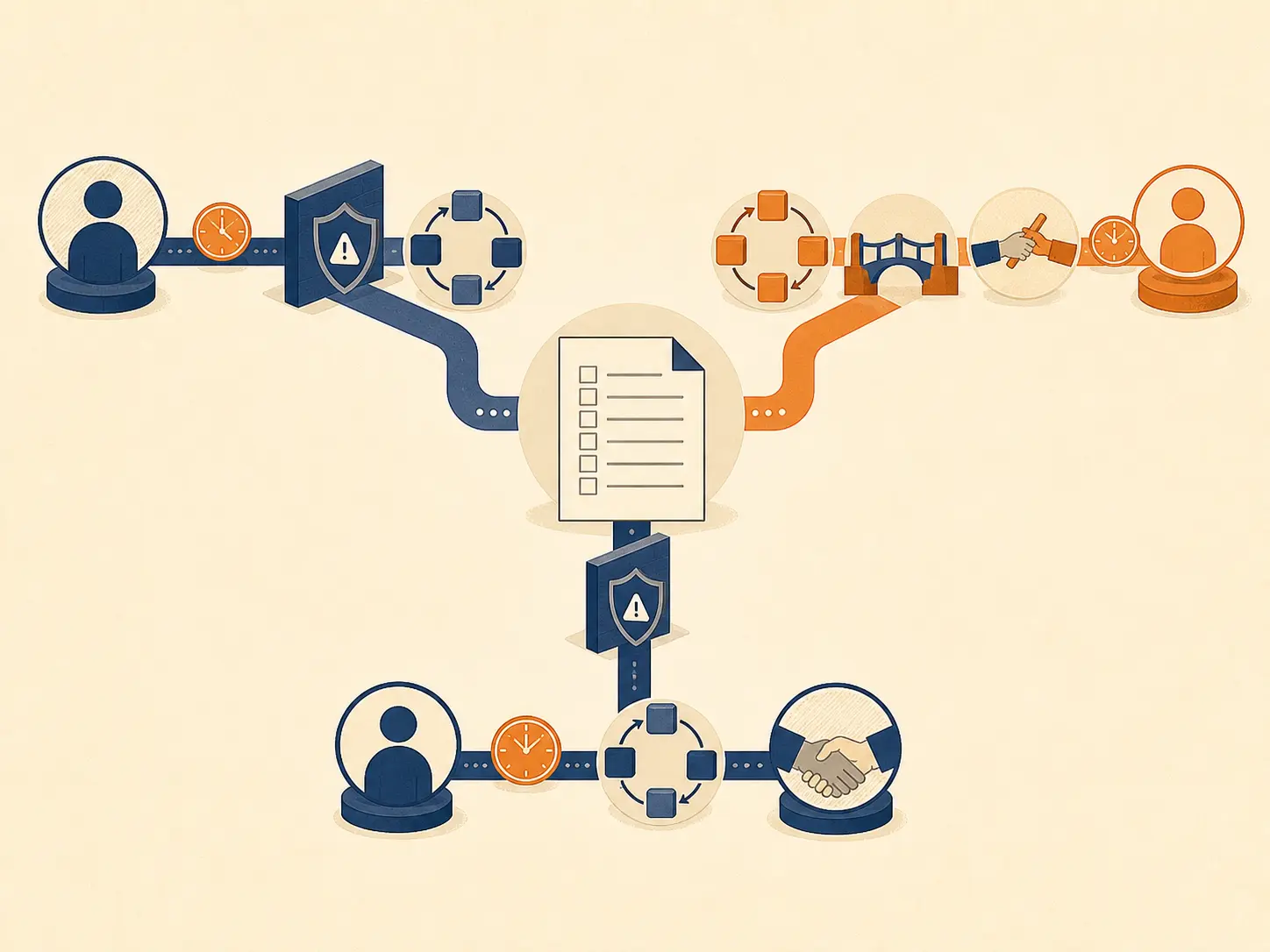
The handoff is complete when the owner can perform the workflow on a new input and explain where it can fail. For this worksheet, acceptance means the owner can:
- Start with a clean query brief and a new source set.
- Run the workflow without hidden instructions from the tutor or builder.
- Explain the source, claim, data, and review boundaries.
- Change one non-material step without losing the claim ledger or manifest.
- Identify a collision, unsupported claim, malformed field, or stale source.
- Choose a safe next step when evidence is missing instead of publishing anyway.
- Update the worksheet and next-review date after the first independent run.
This is why the AI agent proof-of-concept scoping guide should sit above this decision: implementation is not finished when a model returns an answer. It is finished when an owner can operate the workflow within known boundaries. If you are still choosing which workflow deserves attention, use the small-business AI use-case prioritization guide first.
The buying rule
Choose internal building for a repeatable, bounded workflow when the owner has time, a clear done test, and enough capability to review the result.
Choose tutoring-led co-build when you need a real workflow delivered while the owner learns to operate, evaluate, and extend it.
Choose external implementation when the scope is clear and specialist delivery is the bottleneck. Keep internal ownership of the outcome, data boundary, governance decision, and handoff.
If you cannot name the owner, the done test, or the risk boundary, do not choose among the three yet. Fix those facts first. Marius Manolachi's AI consulting and tutoring work is designed for that decision and capability-transfer stage, not for becoming the hidden owner of your system.
Continue with a related field note
Questions people ask next
Can tutoring replace implementation work?
Only when the internal owner has time, access to representative work, a clear risk boundary, and the ability to pass the handoff tests. Tutoring transfers capability while producing a real workflow. It does not remove the need for engineering, governance, or specialist delivery when those are missing.
When should a company use external implementation?
Use external implementation when the outcome and scope are clear, the deadline is real, specialist delivery capacity is missing, and an internal owner can accept and operate the result. Pause if the supplier cannot transfer the inputs, decisions, tests, and operating instructions.